Azerbaijani Mugham: Improvised Music of the Caucasus
In 2003, UNESCO proclaimed Azerbaijani mugham a masterpiece of the oral and intangible heritage of humanity. The recognition shows that this tradition of singing and instrumental improvisation matters well beyond the Caucasus. But what exactly is mugham, and why does every performance sound different? This article explains how it is built, introduces the instruments and describes its standing on the international heritage lists.
What Is Azerbaijani Mugham?
Mugham is a musical tradition that joins singing with instrumental improvisation. It rests on a modal system, meaning a stock of pitches and melodic rules within which musicians move freely, though not arbitrarily. Improvised singing here does not mean that melodies are invented at random. A mugham performer knows the modal framework and builds a personal musical narrative inside it. Tradition and improvisation therefore work together in mugham.
A piece consists of consecutive sections in which the mood unfolds step by step. The texts come from classical poetry, often in the form of ghazals. The sung word matters as much as the music in mugham, and the singer gives it special expressive power through improvisation.
The Tar, the Kamancha and the Frame Drum
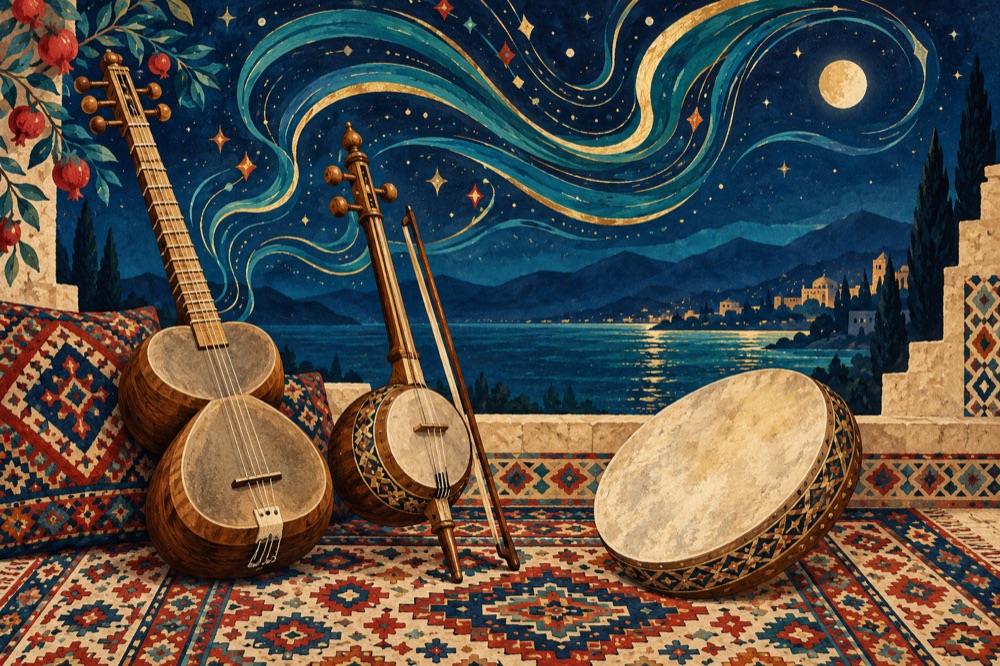
The typical ensemble pairs a singing voice with several instruments, each taking its own sonic role. The tar is a plucked string instrument, while the kamancha belongs to the bowed strings. A frame drum, called a daf or a gaval, rounds out the group. It is easy to hear how the different tone colors work together.
The interplay resembles a conversation between voice and instruments. The tar and the kamancha can lead the melody or answer the singer's phrases, while the drum lays down the rhythmic foundation. Every performance is therefore a dialogue in which the musicians shape the improvised singing together.
Mugham on the UNESCO Lists
The recognition of 2003 was followed in 2008 by the inscription of mugham on the Representative List of the Intangible Cultural Heritage of Humanity. It was the first element from Azerbaijan on that list, which further underlines its rank in the country's culture.
The two entries, five years apart, show that mugham is regarded as a living tradition and not just a relic of the past. Safeguarding intangible heritage focuses above all on the people who keep it alive: singers and instrumentalists alike. The tradition thrives on performances in which the improvised singing is created anew each time.
As a first step, it is worth listening to a complete performance with tar, kamancha and drum. It shows better than anything how mugham works.