Azerbaijani Carpets: Weaving, Patterns and Tradition
In 2010, at its session in Nairobi, UNESCO added the traditional art of Azerbaijani carpet weaving to its list of intangible cultural heritage. Azerbaijani carpets are therefore more than furnishings: they express a living tradition passed down from generation to generation. How do the types of carpet differ, and where do their patterns come from? The answer starts with the craft itself.
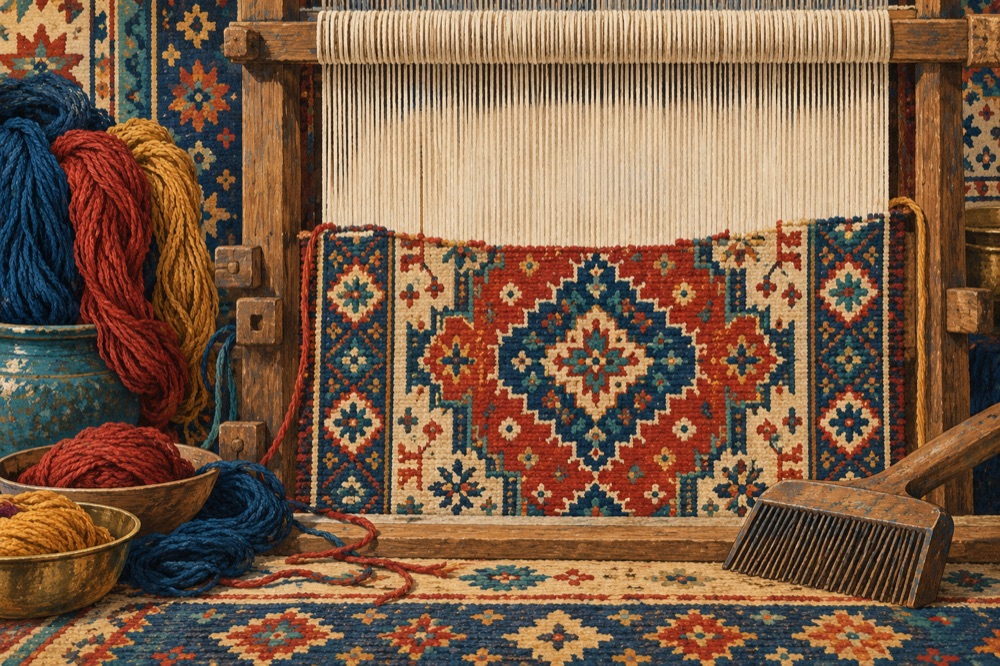
What Is Carpet Weaving in Azerbaijan?
In Azerbaijan, carpet weaving is a home craft practiced mainly by women. The skills are handed on within the family: knowledge of weaves, colors and the layout of ornaments passes from mothers to daughters. A carpet is therefore often seen as a record of family tradition and not merely as a household item.
Azerbaijani carpets fall into two basic groups. The first consists of flatwoven pieces, which include kilims, for example. The second covers knotted carpets with a pile. The difference lies in the surface. Most descriptions are built on this division.
Patterns: Geometry and Plants
The patterns on Azerbaijani carpets are geometric or floral. Geometric motifs form repeating figures, while plant ornaments give the composition a more flowing character. Many carpets have a medallion in the middle of the field. This frequently used motif organizes the whole design and stresses its center. When looking at a carpet, it pays to notice first whether the forms are geometric or floral and then to look for a medallion.
Color matters too. Traditionally, dyes were often obtained from plants, though synthetic dyes are also used today. How a carpet looks therefore depends not only on its pattern but also on when it was made and how the yarn was dyed.
Regional Weaving Schools
Azerbaijani carpets are usually assigned to regional weaving schools. The ones named most often are Quba-Shirvan, Ganja-Gazakh, Karabakh and Tabriz. The number of schools varies by source, with some accounts naming fewer and others more. Keep that in mind when comparing different publications.
Each weaving school is tied to its own center and its own craft habits. That is why a carpet can often be placed just from the arrangement of its patterns. The division into weaving schools helps make sense of the variety of carpet art across the country. When comparing, pay attention to pattern, weaving school and coloring.
Why This Tradition Matters
Inclusion on the UNESCO list confirmed the importance of Azerbaijani carpet weaving as part of the cultural heritage. The craft combines handwork, knowledge passed down in families and a rich language of ornament. Kilims and knotted carpets, geometric and floral patterns, dyes and regional weaving schools together define this craft. Anyone who wants to get to know the culture of Azerbaijan will find a way in through carpet art. Further articles in this guide present the traditions of the region.